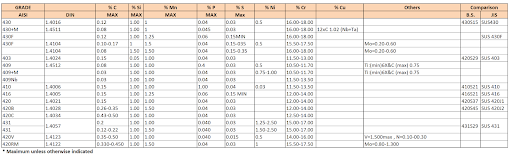
Quality & Specification

At DH Bars & Wires, we prioritize quality at every step of our manufacturing process. Our in-house Non-Destructive Testing (NDT) capabilities ensure that each bright bar meets the highest standards of structural integrity guaranteeing defect free bars reaching our customers.

INSPECTION FACILITIES

Diametric (Auto Sorter)

Spectrometer

Mechanical Testing (Tensile, Hardness, Yield, Elongation)

Radioactivity Testing

IGC (Intergranular Corrosion) Testing

Non-Destructive Testing (NDT)

Steel Hardness Conversion Table

This table shows approximate hardness of steel using Brinell, Rockwell B and C and Vickers scales. These conversion charts are provided for guidance only as each scales uses different methods of measuring hardness. The right hand column show an approximate equivalent tensile strength.

Steel Hardness conversion calculator

Enter a figure into any of the fields and click calculate, the nearest values in each scale is shown, or zero if out of range. Values are approximate and for guidance only.

Brinell (HB) Rockwell C (HRC) Rockwell B (HRB) Vickers (HV) Tensile Strength (N/mm²)
80072
78071
76070
75269
74568
74667
73566
71165
69564
68163
65862
64261
62760
61359
60158746
59257727
57256694
55255649
53454120589-
51353119567-
50452118549-
48651118531-
46950117505-
46849117497-
456481164901569
445471154741520
430461154581471
419451144481447
415441144381422
402431144241390
388421134061369
375411123931314
373401113881265
360391113761236
348381103611187
341371093511157
331361093421118
322351083321089
314341083201049
308331073111035
300321073031020
29031106292990
27730105285971
27129104277941
26428103271892
26227103271880
25526102258870
25025101255853
24524100252838
24023100247824
2332299241794
2292198235775
2232097227755
2161996222716
2121895218706
2081795210696
2031694201680
1991593199667
1911492197657
1901392186648
1861291184637
1831190183617
1801089180608
175988178685
170787175559
167686172555
166586168549
163485162539
160384160535
156283158530
154182152515
14981149500
14780147490
14379146482
14178144481
13977142480
13776140475
13575137467
13174134461
12772129451
12170127431
11668124422
11467121412
11166118402
10764115382
10562112378
10361108373
9556104
905295
814185
763780
Brinell
HB
3000kg
10mm Ball
Rockwell
HRC
150kg
Brale
Rockwell
HRB
100kg
1/16" Ball
Vickers
HV
Diamond Pyramid
120kg
N/mm²
Tensile strength (Approx)

Reference table: Steel Hardness conversion chart

Since the various types of hardness tests do not all measure the same combination of material properties, conversion from one hardness scale to another is only an approximate process. Because of the wide range of variation among different materials, it is not possible to state confidence limits for the errors in using a conversion table.

Steel Hardness Conversion Table

Hardness ranges for heat treated steel

Heat
Treated
Condition
Q R S T U V W X Z
Tensile Strength 625–775
n/mm²
700–850
n/mm²
775–925
n/mm²
850–1000
n/mm²
925–1075
n/mm²
1000–1150
n/mm²
1075–1225
n/mm²
1150–1300
n/mm²
1550
n/mm²
Hardness Brinell 179–229 201–225 223–277 248–302 269–331 293–352 311–375 345–401 444

Quality Assurance

Non-Destructive Testing (NDT)
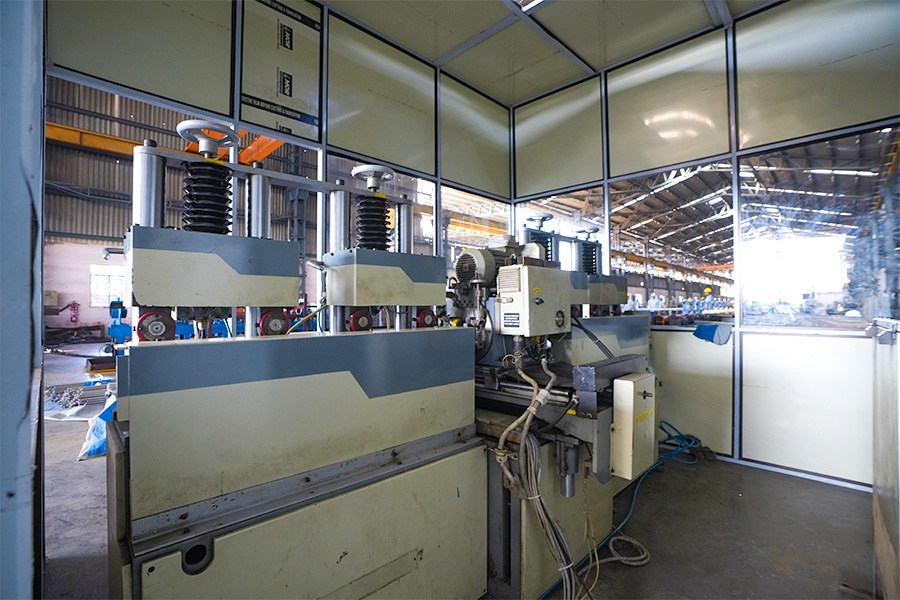
Eddy Current Testing

This is a method that uses electromagnetic induction to detect surface defects in bars. In ECT, a magnetic field is generated that induces eddy currents on the bar's surface. Disruptions in these currents indicate potential flaws such as seamlines or cracks. It is particularly valuable for identifying minute surface flaws that may not be visible to the naked eye but can impact performance in demanding applications such as automotive, aerospace and medical components.

We conduct Eddy Current Testing for bars ranging from 5 mm to 45 mm

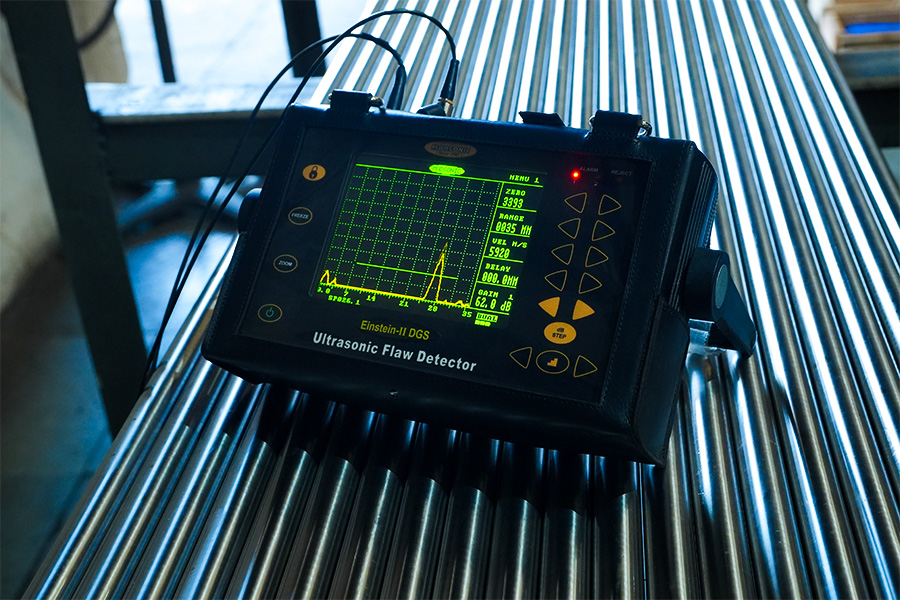
Ultrasonic Testing

This method uses high-frequency sound waves to inspect internal defects. In UT, ultrasonic waves penetrate the material, and any disruptions in the wave path, caused by cracks, voids, or other irregularities, are recorded and analysed. This technique is highly effective for detecting flaws deep within the bar, offering precise information on the location and size of imperfections.

We conduct UT for bars sized 15 mm and above
Magnetic Particle Inspection

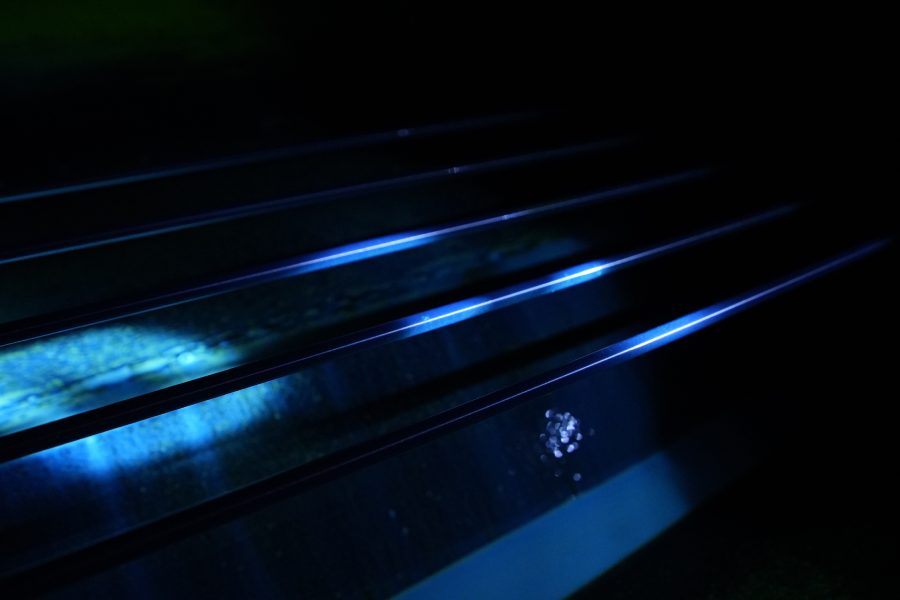
Used primarily for ferromagnetic materials, MPI detects surface discontinuities such as cracks, seams, and inclusions. Used primarily for ferromagnetic materials, MPI detects surface discontinuities such as cracks, seams, and inclusions. A magnetic field is induced into the bar, and iron particles are applied, these cluster at any flaw, making it visible under UV or visible light.

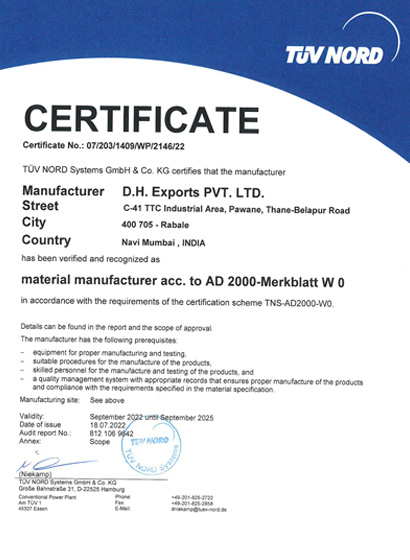
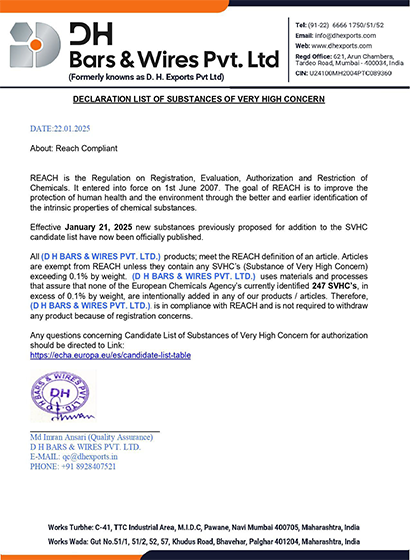
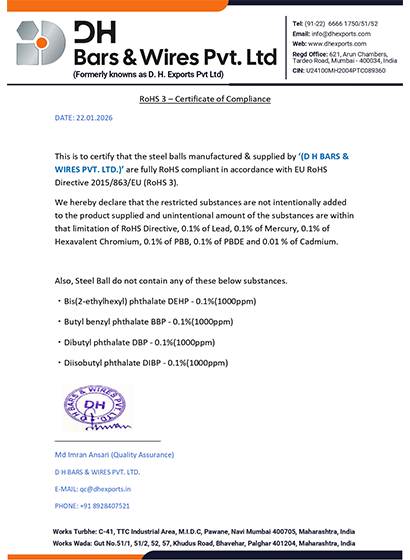
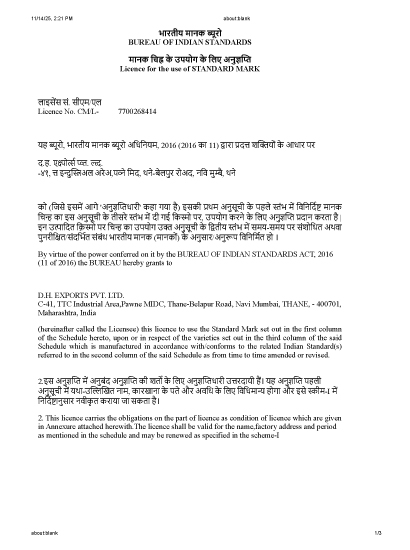
Quality Certification

We take pride in meeting the highest industry standards, ensuring quality, compliance, and trust in every step of our process.

Chart Information

Steel Hardness Conversion
Open Conversion